Hero Image

Written by Mercy Aguti

August 24th, 2026

This article takes 5 min to read

Lost in translation in Karamoja - How we still need the human touch...

As we prepared to introduce Early Childhood Education in Karamoja with our community-led cluster learning model, we needed to find ways to make our play-based learning accessible for all and bridge the gap between study groups and home.

Getting started - Identifying hurdles 

We held many training meetings with the local community to engage them and to listen to their thoughts and concerns. During the meetings, which were held in the local language, Ngakarimojong, it was found that the majority of the community could not read or write English (one of Uganda's official languages), but despite a generally low level of literacy, some members of the community could read and write Ngakarimojong. 

It was also noted during the sessions that when the team used practical demonstrations to show the parents how local materials could be used as learning resources, they understood easily and were able to show their children, for example, using sticks for addition, subtraction and counting. This is very positive, as it should be easy for the parents to extend learning at home.

Community members taking part in a practical demonstration using stones to make patterns.

Bridging the Gap - Adapting for the local environment

After the meetings we had a team discussion and decided we needed to translate the workbooks and adapt the content for the local setting. The existing workbooks in Kyaka II are in English and Swahili, and are fantastic resources for teachers to plan classes. However, many community members in Karamoja had never been to school, so the workbooks were too complex and not all of the activities translated well for the Karamojong environment.  

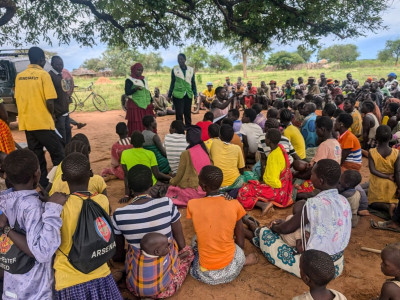
Breaking into discussion groups during the training session.

We started by adapting our existing resources, creating a simple visual activity workbook to give teachers examples of routines. We included play-based activities and learning objectives and wrote some simple, memorable short stories for the children that they could retell to their parents and share their learning. 

Saving time and money with AI

With ever-developing advancements in technology, we thought that AI (Artificial Intelligence) would be able to save us time and money translating our new workbooks. We started by using Gemini and Copilot -  translating our work from English to Ngakarimojong.

However, the AI translation that came back was truly far from reality, which soon made us question its reliability.

"
Google Gemini had a little sense in its translation. Copilot, on the other hand, had little to say or rather nothing at all.
"

Facing the reality of AI translation with shock - and a bit of laughter

Google Gemini had a little sense in its translation; however, the words used were not Karamojong but another language, almost similar to Ngakarimojong, called Ateso from Tororo. These words seemed misplaced, and others had a totally different meaning and would only be understood by someone who understood both languages; for example, ‘welcome circle’ translated to 'the curve of anger'.

Copilot, on the other hand, had little to say or rather nothing at all. The documents appeared to be translated, but when going through the translation, I could not figure out any words correctly, and I couldn’t understand which language it was using. However, two things caught my attention that were correct but misplaced. For example, Copilot translated the word  ‘Arrival’ to ‘Earth’, and ‘hand washing’ was translated as ‘giving birth’; they were the only two words correctly written in Ngakarimojong, but AI had replaced the original text with something totally different. I shared the findings with the team in the office, and each of us had a good laugh at the translation. 

Having received feedback about the translation, we contacted the developers, who apologised for the unreliable translation and advised that we should get a specialist from Karamoja to support the translation. 

The final translation - Playful Learning Activity Book

Children on the Edge Africa

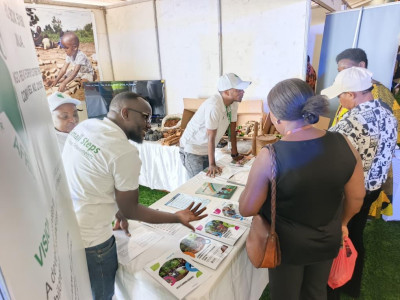
Examples from the playful learning activity book which is being used in Karamoja. The activity book has both Ngakarimojong and English translations and uses lots of visuals and images with real life examples to make it easy to understand and follow.

The cost of getting the content translated externally was huge and was not something that had been budgeted for, so we decided to translate the content internally, and I led on this with support from my colleagues. 

We came up with a process where the original text in English was set out in a table so that it could be translated into Karamojong, and then both the English and Karamojong translations were added to the workbook. This was a challenge, as many words do not directly translate to Ngakarimojong. For example, ‘songs and rhymes’ translates to ‘Ngiyeten ka eruyet ngolo ikwaan ’, but within a month we had designed and translated the 24-page playful learning activity book. The workbook is already being used as the team starts teacher training sessions in Karamoja. 

Community members in Karamoja brought some of their locally sourced, handmade learning materials to one of the workshops.

Mother tongue learning for all

We learnt a huge amount whilst translating the workbooks and adapting our activities for the Karamojong setting. We know that children understand best and learn easily when taught using their mother tongue. Education should not be viewed as teaching children using rote learning in English. Children can learn new ideas and develop their cognitive, physical, and social aspects through play, and this learning is easier when they are taught using the local language. I call on other agencies, i.e NGOs, CBOs, and the government, to embrace and advocate for children to be taught using their mother tongue in their early years of learning.

A donation today can help children in Karamoja access vital play-based early childhood education.

Read more

Sign Up


Thank you!

Thanks for subscribing! Welcome to our Community. Keep an eye out for your first email from us.