Hero Image

Written by Communications Team

October 20th, 2025

This article takes 3 min to read

BBC Radio 4 Appeal: Supporting Rohingya Children to Learn

We are incredibly grateful to the listeners of BBC Radio 4 who supported our 2025 appeal, presented by actress Susannah Fielding. Thanks to the contributions of the Radio 4 audience, our own supporters and a generous foundation who provided £25,000 of match funding, we raised over £50,000. This will have a life-changing impact on the thousands of refugee children we support.

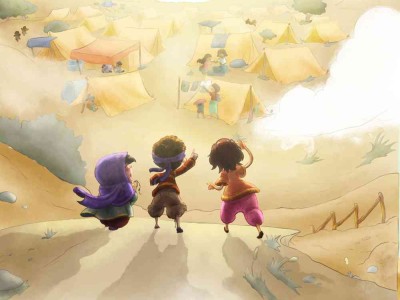
Considered the most persecuted minority in the world, the Rohingya community has been denied the right to learn in their own language for generations. For years, lessons in the Kutupalong refugeee camp in Bangladesh camp were taught only in Burmese, a language Rohingya children and their teachers barely understand.

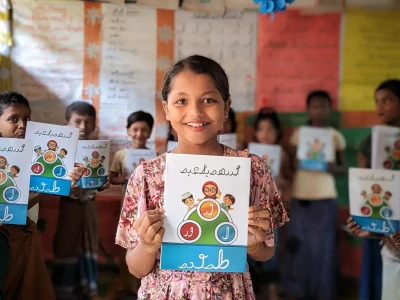
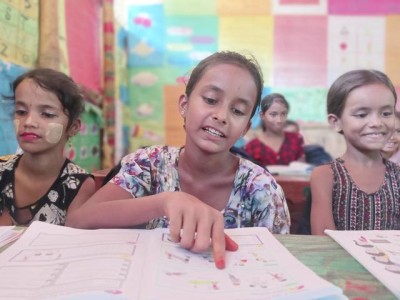
This changed when Children on the Edge introduced lessons in the children's own mother tongue, using a Rohingya alphabet called Hanifi. Now, within just one school term, children can grasp basic reading and writing.

BBC RADIO 4 APPEAL

Our BBC Radio 4 Appeal was broadcast in the week following Sunday 12th October 2025.

Our presenter, Susannah Fielding highlighted the urgent need for meaningful education among Rohingya refugee children in Bangladesh.

Meet Romaina

Imagine being just three years old when your home is destroyed and your family is forced to flee. This was Romaina's reality. in 2017, a brutal military crackdown in Myanmar drove over 700,000 Rohingya Muslims across the border to Bangladesh. Romaina and her family found themselves in Kutupalong, the world's largest refugee camp.

In the camp, lessons were a blur for Romaina. The mandatory curriculum was in Burmese - a language she had not grown up speaking or hearing. She tried to learn, but the words felt clumsy, and understanding simple concepts was a constant struggle. She and her friends felt frustrated and lost.

Romaina's life was transformed by learning to read and write using the Rohingya alphabet. She'll never forget the moment she wrote her name on the board in her own language, met with applause from her classmates. Now, she and thousands of other children are making rapid progress. With an 80% illiteracy rate in the camp, mother tongue learning can unlock a world of possibilities and help build a stronger Rohingya community for the future.

Meet Sadeq

Sadeq was nine years old when his family fled their home in Myanmar. He told us: ‘On that day I saw people being murdered, slaughtered, houses were burnt. I don’t know how we managed to flee’.

They eventually found safety in Bangladesh, where he now attends one of the classrooms we support. When he first started, lessons were taught in Burmese and he only understood a little. As Sadeq explains, ‘it’s not our language, we’ve never spoken it’. 

Sadeq has now learned to read and write using a script for his own Rohingya language, called 'Hanifi'. He says: “The beautiful thing is that I can now actually write the words and sentences that I speak every day. Learning Hanifi has been a huge boost to my confidence”.

Our hope is to eventually translate teaching tools and textbooks into the Rohingya mother tongue for dozens more education providers in the camp, potentially reaching as many as 337,000 more children. We believe this is a historic step forward in securing Rohingya literacy and identity. 

Donate Today

Your support can help Rohingya refugee children learn in their own language, paving the way for a brighter future.

£30 could pay for a child like Romaina to have a whole term of lessons in a language they understand.

Read more

Sign Up


Thank you!

Thanks for subscribing! Welcome to our Community. Keep an eye out for your first email from us.